

Simple Guide to Choosing the Right Ketonic Resin
Nov 04, 2026
Synthetic ketonic resins are versatile
thermoplastic materials widely used in industrial formulations such as inks,
coatings, adhesives, and paints. They are produced through controlled
ketonization reactions, yielding polymers with excellent solubility, chemical
resistance, and film-forming properties. Unlike natural resins, these resins
are engineered to achieve precise performance, offering consistent viscosity
and melting behavior.
These resins serve as backbone components
in many chemical formulations. They not only enhance adhesion and gloss but
also ensure fast drying and compatibility with various solvents. Their
synthetic resin origin allows control over molecular structure, which directly
affects key factors such as hardness, flexibility, and yellowing resistance.
What makes synthetic ketonic resins
unique is their ability to bind well with pigments and other additives without
compromising the integrity of the application system. As demand for
high-performance coatings and inks grows, selecting the right synthetic
ketone resin becomes increasingly critical—especially when considering
viscosity and melting range.
Industrial Significance and Core Properties
Synthetic ketonic resins appear chemically
simple but offer multifaceted utility in industrial chemistry. Their low acid
value, excellent pigment wetting performance, and good thermal stability make
them suitable for demanding applications such as high-speed printing or
precision coating.
Common characteristics include:
• Soluble in ester, alcohol, and
hydrocarbon solvents
• Stable performance under different
humidity and temperature conditions
• Compatible with nitrocellulose, alkyd
resins, and acrylic resins
• Fast solvent release and minimal odor
Industries prefer these resins because they
can adjust the flow and viscosity of formulations. Their applications range
from mass production of ballpoint pen inks to specialized flexographic
printing.
Key Parameters: Viscosity and Melting Range
Significance of Viscosity in Resins
Viscosity is a fundamental parameter
defining the flow behavior of resins. In synthetic ketonic resins, viscosity affects not only processing
performance but also final film quality. Manufacturers typically report
viscosity in centipoise, depending on the test method and temperature.
For example, AH-110 exhibits low viscosity,
making it ideal for formulations requiring easy flow and fast drying—such as
general-purpose inks. On the other hand, AH-130 has a high viscosity range,
suitable for pigment dispersions requiring strong film integrity and high
gloss.
Proper viscosity selection ensures:
• Adequate pigment dispersion
• Reduced nozzle clogging
• Smooth coating on various substrates
• Stable rheological properties under different thermal conditions
It is not just a matter of flow—viscosity may
also affect how synthetic resins interact with other binder systems, solvents,
and pigments. Therefore, resin selection should consider application methods,
end-use environments, and curing conditions.
Importance of Melting Range for Application Suitability
Melting range indicates the thermal
behavior of resins. Unlike substances with a definite melting point, resins
soften over a range, allowing flexible processing. For synthetic ketonic resins,
this range can affect everything from storage stability to ease of mixing in
formulations.
In industrial applications such as
flexographic printing or paint application by wholesale suppliers of ketonic resins, selecting a resin with a compatible melting range ensures uniform film
formation and prevents defects such as cracking, blushing, or embrittlement.
When applied, first dissolve the resin into
a resin solution with a solid content of 50-70% using a solvent, and then add
the resin solution to the formula of the coating/ink. The general amount of
addition is 5-30% of the total mass of the formula.
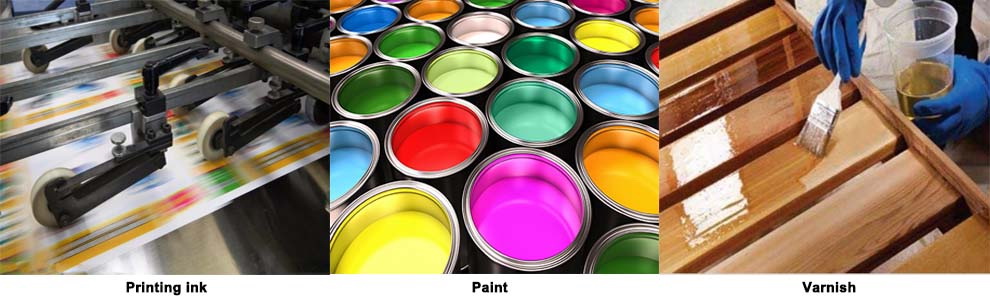
AH-110 significantly improves the adhesion
of coatings/inks in the polyketone resin series products;
AH-120 is a common polyketone resin product
that can be used in coating/ink formulations to improve its adhesion, gloss,
and hardness;
AH- 120L is a low odor product in the
polyketone resin series, used in coating/ink formulations with strict odor
requirements;
AH-130 is a product in the polyketone resin
series with a fast solvent release rate, suitable for formulations with high
requirements for solvent release rate.



 Réseau IPv6 pris en charge