

Catégories
Nouveau blog
Caoutchouc chloré dans les peintures et revêtements : un matériau durable et polyvalent pour les revêtements protecteurs
Jan 05, 2026Dans le vaste univers des revêtements spéciaux, où l'innovation met constamment en avant de nouvelles chimies, certains matériaux s'imposent grâce à leurs performances exceptionnelles et fiables. Caoutchouc chloré Le CR est un exemple classique et très performant. Bien que son utilisation ait évolué en raison de considérations environnementales, il demeure une référence pour certaines applications critiques, apprécié pour ses propriétés protectrices uniques.
Depuis des décennies, le caoutchouc chloré est un matériau de base pour les ingénieurs et les prescripteurs à la recherche d'une barrière robuste et économique contre les environnements les plus extrêmes. Voyons ce qui le rend si particulier et dans quels domaines il excelle encore.
Le caoutchouc chloré est produit par chloration du caoutchouc naturel ou synthétique. Ce procédé chimique transforme le polymère de base, lui conférant une gamme de propriétés idéales pour les revêtements protecteurs :
Teneur élevée en chlore : c’est la clé, car elle confère une résistance intrinsèque au feu et aux produits chimiques.
Structure non polaire : la rend hautement hydrophobe (repoussant l'eau).
Nature thermoplastique : Permet de former un film continu et sans joint.
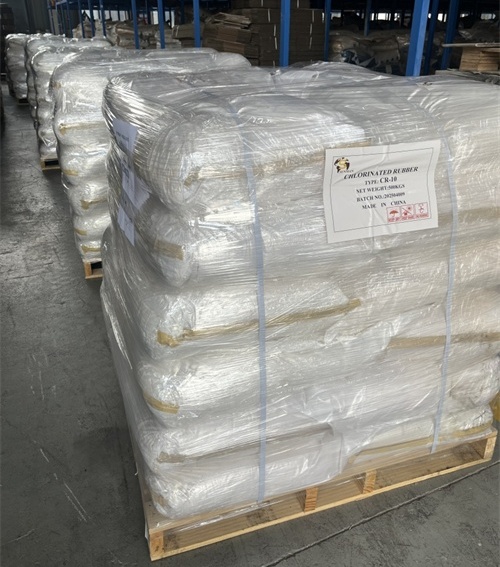
Barrière exceptionnelle contre l'humidité et la vapeur : c'est sans doute son principal atout. Les films CR présentent des taux de transmission de vapeur d'eau extrêmement faibles, créant ainsi une barrière quasi imperméable. Ils sont donc idéaux pour les structures immergées ou constamment humides, empêchant l'amorçage de la corrosion sous le film.
Résistance chimique exceptionnelle : les revêtements CR résistent à une large gamme d’acides, d’alcalis, d’agents oxydants, de sels et d’huiles minérales. Ils constituent un choix de premier ordre pour la protection de :
Intérieurs d'usines chimiques (murs, sols, plafonds).
Installations de traitement des eaux usées et de l'eau potable.
Structures marines et offshore exposées aux eaux de cale et aux sels.
Séchage rapide et application facile : les peintures CR sont généralement des systèmes monocomposants à base de solvant qui sèchent rapidement par évaporation du solvant. Cela permet un recouvrement rapide et une réalisation plus rapide des projets, même dans des conditions fraîches et humides où d’autres peintures pourraient avoir des difficultés.
Bonne adhérence et flexibilité : Elles adhèrent parfaitement à l’acier, au béton et à d’autres supports correctement préparés. Le film conserve une certaine flexibilité, s’adaptant aux légers mouvements du support sans se fissurer.
Durabilité en environnements difficiles : correctement formulés, les revêtements CR offrent une protection à long terme contre les intempéries, la dégradation par les UV (bien qu’un certain farinage puisse se produire) et les conditions abrasives.
Malgré l’essor de nouvelles technologies comme l’époxy, le polyuréthane et les acryliques haute performance, le CR conserve un créneau essentiel :
Revêtements marins et offshore : coques (sous la ligne de flottaison), ballasts, ponts et structures métalliques. Son excellente étanchéité est primordiale dans ce contexte.
Peintures pour piscines : Un choix traditionnel et efficace pour le revêtement des piscines en béton et en plâtre grâce à sa résistance au chlore et à l'eau.
Revêtements de sol haute résistance : pour les usines, les entrepôts et les usines chimiques nécessitant un sol sans joint, résistant aux produits chimiques et facile à nettoyer.
Revêtements pour infrastructures et architecture : utilisés sur les ponts, les structures métalliques et le béton dans des environnements agressifs (côtiers, industriels).
Peintures de marquage routier : leur séchage rapide et leur durabilité en ont fait une référence historique pour le marquage des routes.



 Réseau IPv6 pris en charge